Buy autoplin.eu ?
We are moving the project
autoplin.eu .
Are you interested in purchasing the domain
autoplin.eu ?
domain@kv-gmbh.de · 0541-91531010
Buy autoplin.eu ?
Which animal has the best food conversion efficiency?
The animal with the best food conversion efficiency is the broiler chicken. Broiler chickens are specifically bred for meat production and have been optimized to efficiently convert feed into muscle. They have a high feed conversion ratio, meaning they require less feed to produce a pound of meat compared to other animals. This makes them one of the most efficient animals for meat production. **
What is the energy conversion and efficiency of geothermal energy?
Geothermal energy is the conversion of heat from within the Earth into electricity. This heat is used to generate steam, which then drives turbines connected to generators to produce electricity. The efficiency of geothermal energy conversion is relatively high, typically around 10-23%, which is comparable to other renewable energy sources such as wind and solar. This high efficiency makes geothermal energy a reliable and sustainable source of power. **

Similar search terms for Nebbiolo-Bricco-Boschis-Cavallotto
Top-Angebote
Products related to Nebbiolo-Bricco-Boschis-Cavallotto:
-
Abbona Marziano Nebbiolo d'Alba 'Bricco Barone' Marziano Abbona 2024The Nebbiolo d'Alba 'Bricco Barone', made by Marziano Abbona's Piedmontese winery, exalts the best characteristics of the area's native vine in its fragrant expressive immediacy. Intense and harmonious, it offers all the fruity freshness of the grape, combined with a good body, which makes it very satisfying to drink. Due to its particular characteristics of smoothness and finesse, it is a very ductile wine at the table, where it pairs very well with pasta with meat sauce, noble poultry on the spit or roast white meats. "Bricco Barone" is a Nebbiolo d'Alba produced by Marziano Abbona, who cultivates vineyards both in the Dogliani area and in the Langhe. It is a family-run business, which started in the early 1900s and today manages around 60 hectares. The wines are appreciated by wine lovers for their straightforward character and great territorial typicality. The Nebbiolo grapes come from a 36-year-old vineyard, located in a magnificent hilly area at Bricco Barone di Rinaldi. At the end of harvesting operations, the best grapes are sent to spontaneous fermentation, using only indigenous yeasts, in temperature-controlled stainless steel tanks, with maceration on the skins for a few weeks. The wine matures for a few months in 35 hectolitre oak casks and stays in steel tanks for a short period before bottling. "Bricco Barone' from the Marziano Abbona winery is a Nebbiolo d'Alba of good stuff, ready to drink young, but which also has good ageing potential, of at least ten years. To the eye, it is dark ruby red with faint garnet-coloured reflections. Elegant and intense, it reveals on the nose floral aromas of violet and dried rose petals, hints of redcurrant, morello cherry, raspberry, delicate spicy and herbal notes. The palate is of medium structure, with a dense tannic texture but of good fineness and well integrated with a delicate and fragrant fruit, which retains a clear varietal character. The finish is fresh and with good taste persistence.20,00 £*Shipping: 48,00 £Secure redirect to the provider
-
Barolo Riserva 'Vignolo' Cavallotto 2018The Barolo Riserva “Vignolo” from the Cavallotto winery is an important, complex, and structured red wine produced in the municipality of Castiglione Falletto, just a few kilometers from Alba, in one of the most appreciated areas worldwide for viticulture and the beauty of the landscape, characterized by breathtaking hills and charming small villages. Born traditionally from pure Nebbiolo grapes, it comes from vineyards of the Vignolo cru, located on hills at about 310 meters above sea level, with a southwest orientation, and cultivated using the guyot trellising method on white soils rich in calcium and sand, characterized by clay-limestone marl soils. The winery is a family-run business, owning about 23 hectares of vineyards, managed by brothers Giuseppe, Alfio, and Laura Cavallotto, who adhere to organic farming practices and produce wines in a traditional style, firmly rooted in the winemaking traditions of the area. The “Vignolo” Riserva from Cavallotto is a Barolo made from carefully selected grapes from a single vineyard and harvested manually around the first decade of October. The best bunches are then taken to the winery for destemming-crushing, after which they undergo alcoholic fermentation, using exclusively indigenous yeasts, in horizontal tanks at a controlled temperature of a maximum of 29 °C with semi-submerged cap maceration for about 18-30 days. This is followed by pressing and malolactic fermentation, which takes place in cement tanks in the spring following the harvest. At this point, the wine remains in aging for at least 48 months in large Slavonian oak barrels, before being bottled and continuing its maturation in the bottle for another 12 months before being released on the market.The Barolo “Vignolo” Riserva from Cavallotto presents itself with a deep garnet red color. On the nose, intense aromas of ripe fruit and jam emerge, including cherry, raspberry, blackberry, and currant, floral notes of rose and dried field flowers, spicy hints of licorice, coffee, cocoa bean, and a slight mentholated balsamic imprint on the finish. On the palate, it is decisive,119,00 £*Shipping: 48,00 £Secure redirect to the provider
-
Dolcetto d'Alba 'Vigna Scot' Cavallotto 2024Il “Vigna Scot” è un Dolcetto d’Alba con cui la cantina Cavallotto dà voce a uno dei vini più tradizionali della Langa piemontese. Il lavoro compiuto con quest’etichetta è a dir poco interessante, e il vitigno Dolcetto riesce a esprimersi perfettamente al naso con le consuete note, acquisendo però al palato un profilo più importante, che gli consente una buona propensione all’invecchiamento, nonostante rimanga un prodotto dal profilo fresco, giovane e immediato. Una bottiglia che fa sempre la sua figura in tavola, accompagnando pizze, affettati e primi di terra. Il Dolcetto d’Alba “Vigna Scot” ha origine dalle vigne di proprietà di Cavallotto situate nel comune di Castiglione Falletto, esposte verso nord-est. I grappoli vengono raccolti manualmente durante la vendemmia, per poi essere immediatamente trasferiti nei locali adibiti alla vinificazione della cantina. Qui vengono diraspati, e gli acini ottenuti da questa operazione si avviano alla pressa. La fermentazione del mosto avviene con lieviti naturali, e la macerazione a cappello semi sommerso ha una durata di 4 giorni. L’affinamento non prevede alcun passaggio in legno, ma solamente un periodo di 8 mesi in vasche di cemento, al termine del quale il vino è pronto per venire imbottigliato e commercializzato. Il “Vigna Scot” Dolcetto d’Alba alla vista si annuncia con un colore rubino, che tende leggermente più al granato nell’unghia. Il naso è una bella esaltazione dei profumi varietali del vitigno di partenza, dominati da tocchi fruttati e floreali. All’assaggio è di corpo tendente al medio, armonioso, con un sorso fasciante al palato, da cui emerge un’impronta sapida rinfrescante, che incrementa la scorrevolezza della beva al palato. Un’etichetta che reinterpreta un vino della tradizione regionale elevandolo a un livello superiore grazie al grande know-how della cantina Cavallotto.20,00 £*Shipping: 48,00 £Secure redirect to the provider
-
Dolcetto d'Alba 'Vigna Scot' Cavallotto 2025The “Vigna Scot” is a Dolcetto d’Alba with which the Cavallotto winery gives voice to one of the most traditional wines of the Piedmont Langa. The work done with this label is nothing short of interesting, and the Dolcetto grape manages to express itself perfectly on the nose with the usual notes, but acquires on the palate a more significant profile, allowing it a good propensity for aging, despite remaining a product with a fresh, young, and immediate profile. A bottle that always makes a statement on the table, pairing well with pizzas, cold cuts, and hearty first courses. The Dolcetto d’Alba “Vigna Scot” originates from the vineyards owned by Cavallotto located in the municipality of Castiglione Falletto, exposed to the northeast. The grapes are hand-picked during the harvest, and then immediately transferred to the winery's vinification facilities. Here they are destemmed, and the berries obtained from this operation are sent to the press. The fermentation of the must occurs with natural yeasts, and the maceration with a semi-submerged cap lasts for 4 days. The aging does not involve any passage in wood, but only a period of 8 months in cement tanks, at the end of which the wine is ready to be bottled and marketed. The “Vigna Scot” Dolcetto d’Alba presents itself with a ruby color, slightly tending towards garnet at the rim. The nose is a beautiful exaltation of the varietal aromas of the starting grape, dominated by fruity and floral notes. On the palate, it is medium-bodied, harmonious, with a smooth sip, from which emerges a refreshing savory imprint that enhances the drinkability on the palate. A label that reinterprets a wine of regional tradition, elevating it to a higher level thanks to the great know-how of the Cavallotto winery.21,00 £*Shipping: 48,00 £Secure redirect to the provider


-
What influences the efficiency of energy conversion in the heating plate?
The efficiency of energy conversion in a heating plate is influenced by several factors. The material and design of the heating element play a crucial role in determining how efficiently energy is converted into heat. The temperature control mechanism also affects efficiency, as precise control can prevent energy wastage. Additionally, the insulation of the heating plate can impact efficiency by reducing heat loss to the surroundings. Regular maintenance and cleaning of the heating plate can also help maintain its efficiency over time. **
-
What is the efficiency and conversion in a pumped storage power plant?
In a pumped storage power plant, the efficiency refers to the ratio of the electrical energy output to the energy input. Typically, the efficiency of a pumped storage power plant is around 70-80%, which means that it can convert 70-80% of the input energy into electrical energy. The conversion process involves using excess electricity to pump water from a lower reservoir to a higher reservoir, and then releasing the water to generate electricity when needed. This process allows for the storage of energy and the efficient conversion of potential energy into electrical energy. **
-
Is it worth refueling?
Whether it is worth refueling depends on several factors such as the current fuel level, the distance to be traveled, and the availability of fuel stations along the way. If the fuel level is low and there are no fuel stations nearby, then refueling would be necessary to avoid running out of fuel. However, if there is enough fuel to reach the destination or a fuel station is easily accessible, then refueling may not be immediately necessary. It is important to consider these factors and plan accordingly to ensure a smooth and safe journey. **
-
How much does it cost per month to maintain a car, including fuel, insurance, vehicle maintenance, and savings?
The cost of maintaining a car per month can vary depending on factors such as the type of car, driving habits, and location. On average, it can cost anywhere from $500 to $1,000 per month. This includes expenses such as fuel, insurance, regular vehicle maintenance (oil changes, tire rotations, etc.), and savings for unexpected repairs or emergencies. It's important to budget for these costs to ensure the smooth operation and longevity of your vehicle. **

Can you help me explain the reason why the efficiency of a energy conversion system is always less than 1?
The efficiency of an energy conversion system is always less than 1 because of the second law of thermodynamics, which states that in any energy conversion process, some energy is always lost as waste heat. This means that not all of the input energy can be converted into useful output energy. Additionally, factors such as friction, resistance, and imperfect conversion processes also contribute to the loss of energy and decrease the overall efficiency of the system. Therefore, it is impossible for an energy conversion system to have an efficiency greater than 1. **
How much does refueling cost?
The cost of refueling can vary depending on the type of vehicle, the current price of fuel, and the amount of fuel needed. On average, refueling a car with a full tank of gas can cost anywhere from $30 to $60, depending on the size of the tank and the fuel efficiency of the vehicle. It's important to monitor fuel prices and plan your refueling stops strategically to save money on gas. **
Top-Angebote
Products related to Nebbiolo-Bricco-Boschis-Cavallotto:
-
Barolo 'Bricco Boschis' Cavallotto 2022This “Bricco Boschis” is a Barolo strong and powerful, perfectly aware of its own value and virtues. It's easy to believe from the first sips, as it originates from one of the most renowned crus of Castiglione Falletto, the Bricco Boschis, from which it takes its name. A label that, vintage after vintage, garners national and international recognition, demonstrating how the Cavallotto winery never misses a beat. Intense and varied aromas combine with a lively drinkability, awakening the palate minute by minute. A great Piedmontese red wine, to be left to age in the cellar for the next fifteen years. The Barolo wine “Bricco Boschis” is born from a meticulous selection of Nebbiolo grapes that the Cavallotto winery selects within its own vineyard of Bricco Boschis. This is a terroir strongly suited to the cultivation of this native Piedmontese grape, which here manages to give its best. The grapes, once brought to the vinification facilities, ferment thanks to the presence of indigenous yeasts, macerating for about 18-30 days. It then continues with the maturation phase, which takes place for at least 36 months in Slavonian oak barrels.The “Bricco Boschis” is a Barolo DOCG that reveals itself to the eye with a changing color, between ruby red and garnet. The olfactory spectrum that develops on the nose highlights layered notes, involving fruit and spices, presented with intensity. On tasting, it has an excellent body, energetic and vigorous, with a very enveloping sip that warms the palate; it ends with a persistent finish, characterized by a savory aftertaste. A bottle with which the Cavallotto winery takes us not only into one of the most important denominations of Piedmont and Italy, but in direct contact with one of the most important vineyards for its production.91,00 £*Shipping: 48,00 £Secure redirect to the provider
-
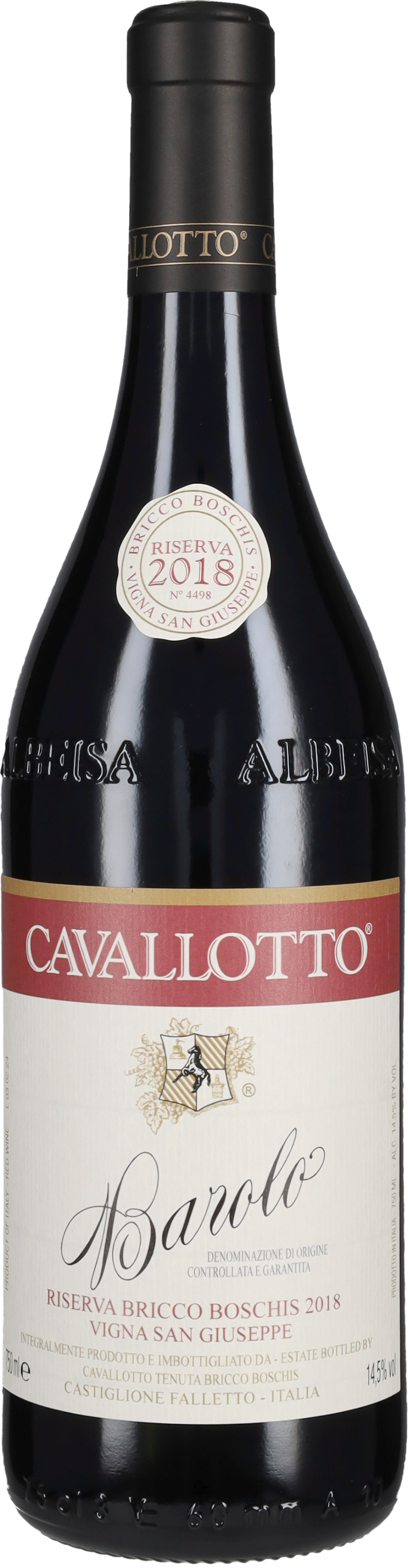
Barolo Riserva 'Bricco Boschis Vigna San Giuseppe' Cavallotto 2018Cavallotto's Barolo Riserva "Bricco Boschis Vigna San Giuseppe" is one of the stainless icons of Barolo Classico, a multifaceted and granitic wine capable of defying the decades by coming out renewed. While it is true that often when we talk about great reds, we take into account their evolutionary potential, the Barolo bottled by the Cavallotto family is a wine that is literally surprising and unbreakable. 23 hectares planted with vines in that of Castiglione Falletto, divided among local indigenous varieties but obviously catalogued according to the nobility of the plots, the best of which is obviously destined for the production of Nebbiolo suitable to become Barolo. The agricultural credo is unchanged since the winery was founded as early as 1948 and did not involve the use of substances other than copper and a little sulfur. The winery's style is a benchmark for lovers of rigour and classicism, as well as of compact and incorruptible wines, capable of unfolding over time, fully revealing their immense class. Barolo Riserva "Bricco Boschis Vigna San Giuseppe" is made, of course, from pure Nebbiolo grapes, from vineyards located on limestone-clay soil and with southwest exposure. In the vineyard, the dictates of organic farming are followed, excluding the use of any chemical or synthetic substance and helping only with copper and sulfur. In the cellar, spontaneous alcoholic fermentation and long maceration on the skins between 22 and 38 days is continued. The liquid ages for at least 48 months in Slavonian oak barrels, followed by 12 months in a glass before release. The Riserva "Bricco Boschis Vigna San Giuseppe" presents itself in the glass with the typical intense garnet-red guise. A true star nose, compressed and detailed at the same time, capable of revealing itself with great calmness. The hints are obviously those typical of the great Nebbiolos and range from dog rose to violets, from liquorice to morello cherry, the same ones found on the sip, although on tasting, the liquid has many other arrows to its bow. Power, depth, interminable length: indisputable!175,00 £*Shipping: 48,00 £Secure redirect to the provider
-
Abbona Marziano Nebbiolo d'Alba 'Bricco Barone' Marziano Abbona 2024The Nebbiolo d'Alba 'Bricco Barone', made by Marziano Abbona's Piedmontese winery, exalts the best characteristics of the area's native vine in its fragrant expressive immediacy. Intense and harmonious, it offers all the fruity freshness of the grape, combined with a good body, which makes it very satisfying to drink. Due to its particular characteristics of smoothness and finesse, it is a very ductile wine at the table, where it pairs very well with pasta with meat sauce, noble poultry on the spit or roast white meats. "Bricco Barone" is a Nebbiolo d'Alba produced by Marziano Abbona, who cultivates vineyards both in the Dogliani area and in the Langhe. It is a family-run business, which started in the early 1900s and today manages around 60 hectares. The wines are appreciated by wine lovers for their straightforward character and great territorial typicality. The Nebbiolo grapes come from a 36-year-old vineyard, located in a magnificent hilly area at Bricco Barone di Rinaldi. At the end of harvesting operations, the best grapes are sent to spontaneous fermentation, using only indigenous yeasts, in temperature-controlled stainless steel tanks, with maceration on the skins for a few weeks. The wine matures for a few months in 35 hectolitre oak casks and stays in steel tanks for a short period before bottling. "Bricco Barone' from the Marziano Abbona winery is a Nebbiolo d'Alba of good stuff, ready to drink young, but which also has good ageing potential, of at least ten years. To the eye, it is dark ruby red with faint garnet-coloured reflections. Elegant and intense, it reveals on the nose floral aromas of violet and dried rose petals, hints of redcurrant, morello cherry, raspberry, delicate spicy and herbal notes. The palate is of medium structure, with a dense tannic texture but of good fineness and well integrated with a delicate and fragrant fruit, which retains a clear varietal character. The finish is fresh and with good taste persistence.20,00 £*Shipping: 48,00 £Secure redirect to the provider
-
Barolo Riserva 'Vignolo' Cavallotto 2018The Barolo Riserva “Vignolo” from the Cavallotto winery is an important, complex, and structured red wine produced in the municipality of Castiglione Falletto, just a few kilometers from Alba, in one of the most appreciated areas worldwide for viticulture and the beauty of the landscape, characterized by breathtaking hills and charming small villages. Born traditionally from pure Nebbiolo grapes, it comes from vineyards of the Vignolo cru, located on hills at about 310 meters above sea level, with a southwest orientation, and cultivated using the guyot trellising method on white soils rich in calcium and sand, characterized by clay-limestone marl soils. The winery is a family-run business, owning about 23 hectares of vineyards, managed by brothers Giuseppe, Alfio, and Laura Cavallotto, who adhere to organic farming practices and produce wines in a traditional style, firmly rooted in the winemaking traditions of the area. The “Vignolo” Riserva from Cavallotto is a Barolo made from carefully selected grapes from a single vineyard and harvested manually around the first decade of October. The best bunches are then taken to the winery for destemming-crushing, after which they undergo alcoholic fermentation, using exclusively indigenous yeasts, in horizontal tanks at a controlled temperature of a maximum of 29 °C with semi-submerged cap maceration for about 18-30 days. This is followed by pressing and malolactic fermentation, which takes place in cement tanks in the spring following the harvest. At this point, the wine remains in aging for at least 48 months in large Slavonian oak barrels, before being bottled and continuing its maturation in the bottle for another 12 months before being released on the market.The Barolo “Vignolo” Riserva from Cavallotto presents itself with a deep garnet red color. On the nose, intense aromas of ripe fruit and jam emerge, including cherry, raspberry, blackberry, and currant, floral notes of rose and dried field flowers, spicy hints of licorice, coffee, cocoa bean, and a slight mentholated balsamic imprint on the finish. On the palate, it is decisive,119,00 £*Shipping: 48,00 £Secure redirect to the provider
-
Which animal has the best food conversion efficiency?
The animal with the best food conversion efficiency is the broiler chicken. Broiler chickens are specifically bred for meat production and have been optimized to efficiently convert feed into muscle. They have a high feed conversion ratio, meaning they require less feed to produce a pound of meat compared to other animals. This makes them one of the most efficient animals for meat production. **
-
What is the energy conversion and efficiency of geothermal energy?
Geothermal energy is the conversion of heat from within the Earth into electricity. This heat is used to generate steam, which then drives turbines connected to generators to produce electricity. The efficiency of geothermal energy conversion is relatively high, typically around 10-23%, which is comparable to other renewable energy sources such as wind and solar. This high efficiency makes geothermal energy a reliable and sustainable source of power. **
-
What influences the efficiency of energy conversion in the heating plate?
The efficiency of energy conversion in a heating plate is influenced by several factors. The material and design of the heating element play a crucial role in determining how efficiently energy is converted into heat. The temperature control mechanism also affects efficiency, as precise control can prevent energy wastage. Additionally, the insulation of the heating plate can impact efficiency by reducing heat loss to the surroundings. Regular maintenance and cleaning of the heating plate can also help maintain its efficiency over time. **
-
What is the efficiency and conversion in a pumped storage power plant?
In a pumped storage power plant, the efficiency refers to the ratio of the electrical energy output to the energy input. Typically, the efficiency of a pumped storage power plant is around 70-80%, which means that it can convert 70-80% of the input energy into electrical energy. The conversion process involves using excess electricity to pump water from a lower reservoir to a higher reservoir, and then releasing the water to generate electricity when needed. This process allows for the storage of energy and the efficient conversion of potential energy into electrical energy. **
Similar search terms for Nebbiolo-Bricco-Boschis-Cavallotto
-
Dolcetto d'Alba 'Vigna Scot' Cavallotto 2024Il “Vigna Scot” è un Dolcetto d’Alba con cui la cantina Cavallotto dà voce a uno dei vini più tradizionali della Langa piemontese. Il lavoro compiuto con quest’etichetta è a dir poco interessante, e il vitigno Dolcetto riesce a esprimersi perfettamente al naso con le consuete note, acquisendo però al palato un profilo più importante, che gli consente una buona propensione all’invecchiamento, nonostante rimanga un prodotto dal profilo fresco, giovane e immediato. Una bottiglia che fa sempre la sua figura in tavola, accompagnando pizze, affettati e primi di terra. Il Dolcetto d’Alba “Vigna Scot” ha origine dalle vigne di proprietà di Cavallotto situate nel comune di Castiglione Falletto, esposte verso nord-est. I grappoli vengono raccolti manualmente durante la vendemmia, per poi essere immediatamente trasferiti nei locali adibiti alla vinificazione della cantina. Qui vengono diraspati, e gli acini ottenuti da questa operazione si avviano alla pressa. La fermentazione del mosto avviene con lieviti naturali, e la macerazione a cappello semi sommerso ha una durata di 4 giorni. L’affinamento non prevede alcun passaggio in legno, ma solamente un periodo di 8 mesi in vasche di cemento, al termine del quale il vino è pronto per venire imbottigliato e commercializzato. Il “Vigna Scot” Dolcetto d’Alba alla vista si annuncia con un colore rubino, che tende leggermente più al granato nell’unghia. Il naso è una bella esaltazione dei profumi varietali del vitigno di partenza, dominati da tocchi fruttati e floreali. All’assaggio è di corpo tendente al medio, armonioso, con un sorso fasciante al palato, da cui emerge un’impronta sapida rinfrescante, che incrementa la scorrevolezza della beva al palato. Un’etichetta che reinterpreta un vino della tradizione regionale elevandolo a un livello superiore grazie al grande know-how della cantina Cavallotto.20,00 £*Shipping: 48,00 £Secure redirect to the provider
-
Dolcetto d'Alba 'Vigna Scot' Cavallotto 2025The “Vigna Scot” is a Dolcetto d’Alba with which the Cavallotto winery gives voice to one of the most traditional wines of the Piedmont Langa. The work done with this label is nothing short of interesting, and the Dolcetto grape manages to express itself perfectly on the nose with the usual notes, but acquires on the palate a more significant profile, allowing it a good propensity for aging, despite remaining a product with a fresh, young, and immediate profile. A bottle that always makes a statement on the table, pairing well with pizzas, cold cuts, and hearty first courses. The Dolcetto d’Alba “Vigna Scot” originates from the vineyards owned by Cavallotto located in the municipality of Castiglione Falletto, exposed to the northeast. The grapes are hand-picked during the harvest, and then immediately transferred to the winery's vinification facilities. Here they are destemmed, and the berries obtained from this operation are sent to the press. The fermentation of the must occurs with natural yeasts, and the maceration with a semi-submerged cap lasts for 4 days. The aging does not involve any passage in wood, but only a period of 8 months in cement tanks, at the end of which the wine is ready to be bottled and marketed. The “Vigna Scot” Dolcetto d’Alba presents itself with a ruby color, slightly tending towards garnet at the rim. The nose is a beautiful exaltation of the varietal aromas of the starting grape, dominated by fruity and floral notes. On the palate, it is medium-bodied, harmonious, with a smooth sip, from which emerges a refreshing savory imprint that enhances the drinkability on the palate. A label that reinterprets a wine of regional tradition, elevating it to a higher level thanks to the great know-how of the Cavallotto winery.21,00 £*Shipping: 48,00 £Secure redirect to the provider
-
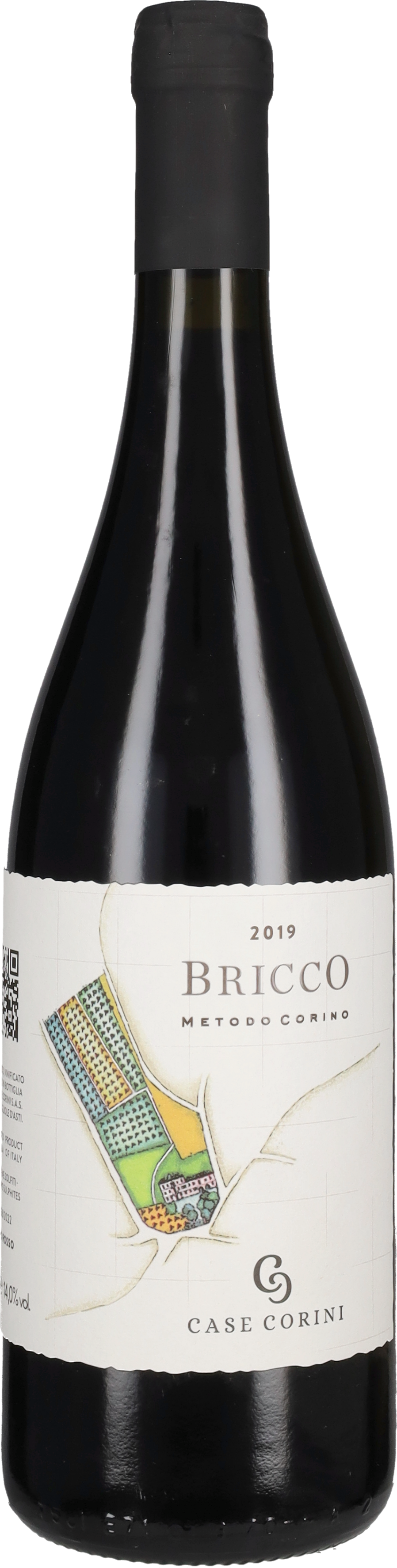
'Bricco' Case Corini 2019Case Corini has been tending the 'Bricco' vineyard since the year of its planting, which can be dated around 1954. Over the years, the different biotypes of the main local grape, which constituted its original population, have gradually been joined by numerous other ancient indigenous varieties and some international vines, transforming it into a de facto experimental plot for observing soil behaviour and response. The 70-year-old vines that mature in the "Bricco" vineyard represent a heritage that Case Corini safeguards in the name of the ethical and environmental sustainability promoted by the now famous Metodo Corino. They are cultivated using the ancient, traditional "alberello" technique and partly with the more modern espalier system, while treatments are limited to the use of copper and sulphur when absolutely necessary. The parcel covers a tiny area of 0.7 hectares in the municipality of Costigliole d'Asti, on soil characterised essentially by marl and Asti sand. The land has a southwest orientation, lying at an altitude of around 250 metres above sea level. The soil is worked with light mechanisation to avoid excessive compaction, while all vine operations are carried out by hand. Harvesting is carried out at a fixed time with great sensitivity, and the grapes are picked in small crates. The bunches are destemmed, and maceration on the skins proceeds hand in hand with spontaneous fermentation, continuing in wooden barrels until the indigenous yeasts have finished their work, even for 9 weeks. There is no clarification, stabilisation, filtration or addition of sulphites. "Bricco' of Case Corini presents a cherry red colour tinged with youthful purple hues. The aromas are intense and enveloping, presenting a fruity impact of ripe red fruits and then varying on hints of fern and undergrowth, with pungent, spicy notes on the finish. The sip is decently intriguing, composed of important structure and present tannic texture, but simultaneously of harmonious mineral richness and composed alternation between freshness and softness.53,00 £*Shipping: 48,00 £Secure redirect to the provider
-
Dolcetto d'Alba 'Bricco Bastia' Conterno Fantino 2025best bunches in the vineyard, traditionally takes place at the beginning of September and fermentation occurs in horizontal steel tanks with a short maceration on the skins of only 4/5 days to avoid the extraction of too many tannins. An aging of 8 months in steel tanks before being bottled concludes the process. The "Bricco Bastia" Dolcetto d'Alba by Conterno Fantino is a harmonious and fruity red, which well expresses the youthful face of the grape variety. The choice not to use wood and the low-extraction maceration preserve the fragrant aromas of the grape and its youthful varietal notes. The glass presents a beautiful bright ruby red color. The olfactory profile is characterized by aromas of cherry, marasca, small dark berry fruits, floral nuances, and delicate spicy hints. The sip is pleasantly agile and dynamic, with a generous and ripe fruit that evolves towards a spicy finish with an elegant almond note.best bunches in the vineyard, traditionally takes place at the beginning of September and fermentation occurs in horizontal steel tanks with a short maceration on the skins of only 4/5 days to avoid the extraction of too many tannins. An aging of 8 months in steel tanks before being bottled concludes the process. The "Bricco Bastia" Dolcetto d'Alba by Conterno Fantino is a harmonious and fruity red, which well expresses the youthful face of the grape variety. The choice not to use wood and the low-extraction maceration preserve the fragrant aromas of the grape and its youthful varietal notes. The glass presents a beautiful bright ruby red color. The olfactory profile is characterized by aromas of cherry, marasca, small dark berry fruits, floral nuances, and delicate spicy hints. The sip is pleasantly agile and dynamic, with a generous and ripe fruit that evolves towards a spicy finish with an elegant almond note.15,00 £*Shipping: 48,00 £Secure redirect to the provider
-
Is it worth refueling?
Whether it is worth refueling depends on several factors such as the current fuel level, the distance to be traveled, and the availability of fuel stations along the way. If the fuel level is low and there are no fuel stations nearby, then refueling would be necessary to avoid running out of fuel. However, if there is enough fuel to reach the destination or a fuel station is easily accessible, then refueling may not be immediately necessary. It is important to consider these factors and plan accordingly to ensure a smooth and safe journey. **
-
How much does it cost per month to maintain a car, including fuel, insurance, vehicle maintenance, and savings?
The cost of maintaining a car per month can vary depending on factors such as the type of car, driving habits, and location. On average, it can cost anywhere from $500 to $1,000 per month. This includes expenses such as fuel, insurance, regular vehicle maintenance (oil changes, tire rotations, etc.), and savings for unexpected repairs or emergencies. It's important to budget for these costs to ensure the smooth operation and longevity of your vehicle. **
-
Can you help me explain the reason why the efficiency of a energy conversion system is always less than 1?
The efficiency of an energy conversion system is always less than 1 because of the second law of thermodynamics, which states that in any energy conversion process, some energy is always lost as waste heat. This means that not all of the input energy can be converted into useful output energy. Additionally, factors such as friction, resistance, and imperfect conversion processes also contribute to the loss of energy and decrease the overall efficiency of the system. Therefore, it is impossible for an energy conversion system to have an efficiency greater than 1. **
-
How much does refueling cost?
The cost of refueling can vary depending on the type of vehicle, the current price of fuel, and the amount of fuel needed. On average, refueling a car with a full tank of gas can cost anywhere from $30 to $60, depending on the size of the tank and the fuel efficiency of the vehicle. It's important to monitor fuel prices and plan your refueling stops strategically to save money on gas. **
* All prices are inclusive of VAT and, if applicable, plus shipping costs. The offer information is based on the details provided by the respective shop and is updated through automated processes. Real-time updates do not occur, so deviations can occur in individual cases. ** Note: Parts of this content were created by AI.